The difference between professional and household kitchen scissors is not primarily about price. It’s about what the product is designed to do, how often it’s expected to do it, and what happens when it doesn’t perform.
Construction and Materials
Household scissors are typically manufactured from lower-grade stainless steel — adequate for occasional use, not designed for sustained cutting load. Professional scissors use higher-carbon stainless steel grades that hold an edge under repeated use and resist corrosion in commercial kitchen environments.
The difference shows up in blade geometry too. Professional blades are precision-ground to tighter tolerances, which affects cutting efficiency and longevity. A blade that starts slightly misaligned will drift further over time.
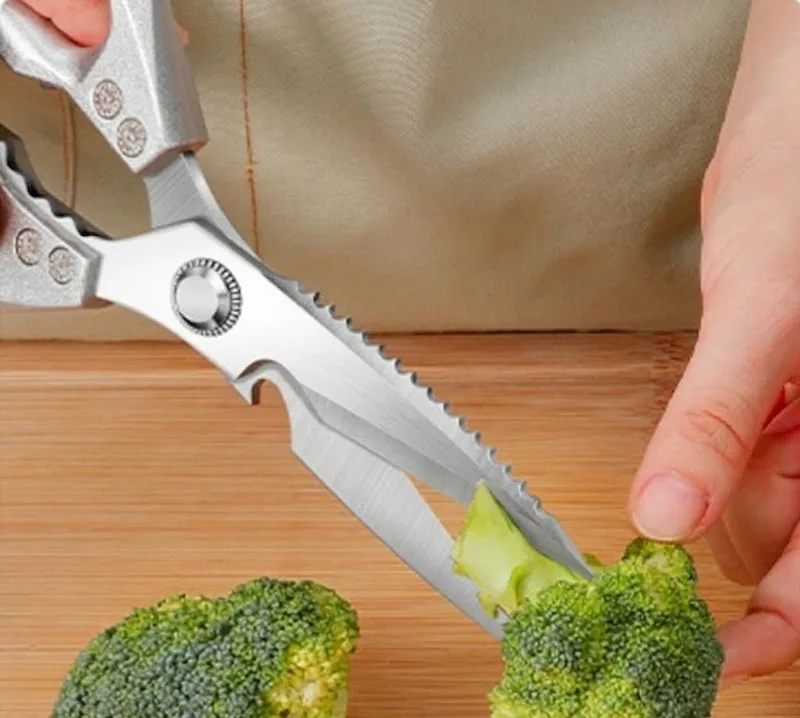
Precision blade geometry on professional kitchen scissors
The Pivot Point
In household scissors, the pivot is often a simple rivet. In professional scissors, it’s typically a precision-machined screw — adjustable, replaceable, and designed to maintain consistent blade tension across thousands of cutting cycles.
This distinction matters more than it appears. Blade alignment is controlled at the pivot. A loose or worn pivot causes the blades to separate under load, which reduces cutting efficiency and accelerates blade wear.
Handle Design
Professional scissors are designed for repeated use over a full shift. Handle ergonomics — finger ring size, grip material, weight distribution — affect fatigue accumulation over hours of use. Household scissors optimize for occasional comfort; professional scissors optimize for sustained performance.
Maintenance and Longevity
Professional scissors are designed to be sharpened and serviced. The blade geometry supports re-grinding. The pivot can be adjusted or replaced. A quality professional scissors set, properly maintained, has a service life measured in years, not months.
Household scissors are generally not designed for this. When they dull, they’re replaced. For commercial buyers, the economics of that model don’t work at scale.
What This Means for Buyers
If you’re sourcing for commercial kitchens, foodservice operations, or professional butchery, the specification decision is straightforward: professional grade. The performance and longevity requirements of those environments are not compatible with household product specs.
If you’re sourcing for retail — particularly mid-to-high-end kitchenware retail — the question is more nuanced. Consumer buyers often don’t distinguish between professional and household scissors at point of purchase. What they respond to is quality signals: weight, finish, blade visible alignment, handle feel. A well-specified professional scissors communicates quality in ways a household product cannot.
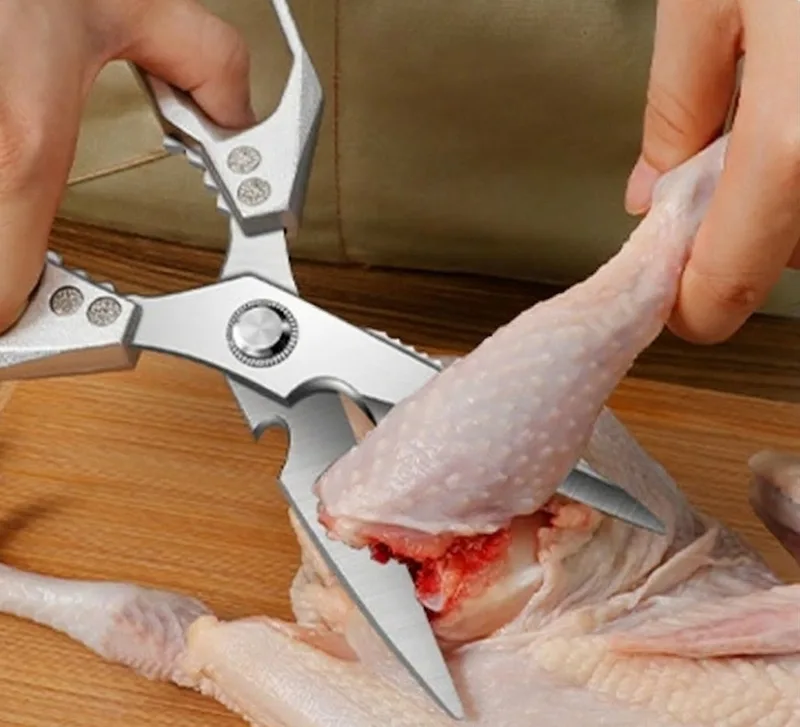
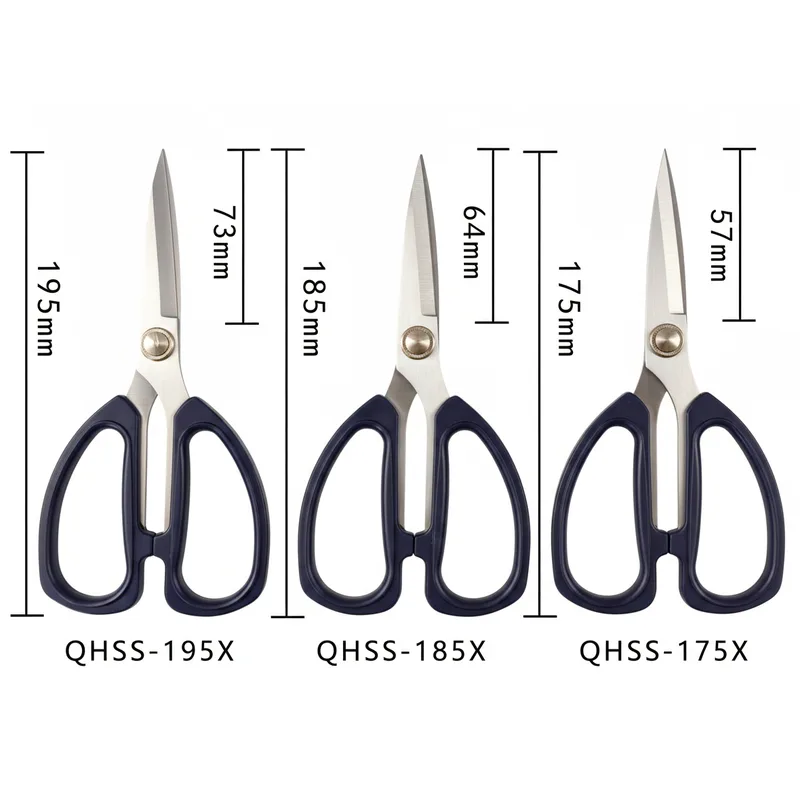
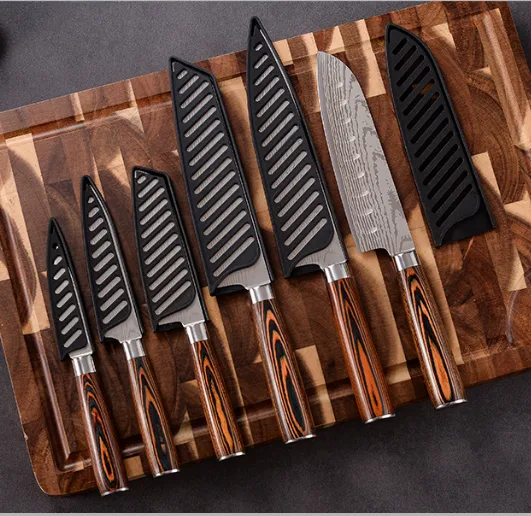
Products Mentioned in This Guide
Sourcing scissors, knives or kitchenware?
Tell us your product, quantity and branding needs — we reply within 24 hours. OEM/ODM, private label and sample orders available.